|
|
|
Jack Burgess

7/20/2026 4:28 AM
|
Congratulations on your landfall and Next Chapter’s anchor down moment. I know that was a good feeling when the anchor rode came tight and you could enjoy the quiet without the diesel humming.
Your postings were fun to read. Concise and informative, but with enough detail to let us enjoy the passage with you all (like the freshly baked cookie breaks). A few more days at sea after some fun in Bermuda and we will be able to welcome you home to America.
Best - Jack
Jack Burgess, Shangri-La 6047
|
|
|
|
|
|
|
Harald Raetzsch
7/20/2026 2:27 AM
|
Congratulations.
We envy you - just a little ;-)
What an adventure, we have been following every step!
Harald Raetzsch Selene 66 Mazu
|
|
|
|
|
|
|
Chris Dutton
7/19/2026 6:10 PM
|
Log #21: Day 14, Landfall in a Beautiful Country
Saturday 10:45 to landfall, St. George's, Bermuda
We made it. Next Chapter came through the cut into St. George's Harbour with about thirty minutes of light to spare, closing out 1,908 nautical miles and thirteen and a half days of open Atlantic. Cleared in, anchor down, and very glad to be here.
The weather gave us no surprises on the last day — 15 to 18 knots just off the port bow, the same as it had been, right up until the end. Next Chapter just kept ticking off the miles as if she knew what the mission was. After thirteen days you stop thinking of the boat as equipment. She was doing her job, and she did it right to the last hour.
We inched out every minute of daylight. We came into St. George's Harbour at 11:30 PM ship's time — 8:30 PM local — roughly half an hour before dark. Every account I'd read said don't run that cut at night, and we didn't have to. It was close, but we didn't have to.
We tied up to the quay right in town and cleared customs. I want to say something about that, because it set the tone for the whole arrival: they could not have been friendlier. There's a version of clearing into a new country that's a chore, and this wasn't it — they welcomed us in, processed our paperwork, and made it feel like an arrival rather than an inspection.
For anyone planning to follow: the formalities here are genuinely easy. It's all one office, right at the pier's edge. Fees are nominal — $5 USD per meter for a five-day in-transit permit, or $6.50 per meter for six months of cruising. And on request you'll also receive a certificate good for one duty-free fuel purchase, which is about a 30% discount off the posted fuel dock price. Worth asking for.
After clearing in we motored a half mile to the anchorage, put down 100 feet of chain, and she set instantly. Then we sat and celebrated a wonderful passage.
We have a tradition aboard of a special drink on arrival in a new country — thirty-three of them now — but we deferred it to tomorrow. Jake, our four-year-old, had gone down for the night well before we came in, and a tradition isn't much of one without the whole crew.
The passage by the numbers
Total distance 1,908 nautical miles Total time 13 days, 13 hours, 45 minutes Average speed 5.86 knots Fuel burned 1,225 gallons Wind, minimum Calm Wind, maximum 52.5 knots Seas, minimum 1 ft ground swell — glass calm on top Seas, maximum 12 ft average, occasional 20 ft Generator run time 8 hours A note on that last one, since it's the number most likely to raise an eyebrow. The generator is our backup propulsion, so we run it a bit every few days simply to know it will start when we need it. And when it's running we take full advantage — both air conditioners, the dryer, and the watermaker, all at the same time. Might as well.
What's next
We plan to explore here for a few days to a week, depending on what the weather looks like between Bermuda and Annapolis, Maryland — where Next Chapter will be available for purchase.
Which raises a question I'd genuinely like to hear answers to: where would you take her next? She's always ready for it, whether that's a couple of hours to a quiet anchorage or back out to sea for days on end. Thirteen days across the Atlantic will tell you that much about a boat.
Follow the dot: trackmywake.com/wake/next-chapter.
— Chris & the crew of Next Chapter
|
|
|
|
|
|
|
Chris Dutton
7/18/2026 4:30 PM
|
Log #20: Day 13, The Last Full Day
Friday 10:45 to Saturday 10:45, Less then 100nm off the coast of Bermuda
Day 13 in the wake — our last full day at sea, and our biggest day of the passage. 162 nautical miles made good, the throttles still forward, and fewer than ninety miles left between us and Bermuda.
There's a particular flavor to the last full day of a crossing. For twelve days the miles-to-go number has been an abstraction — something too large to feel. On Day 13 it stops being abstract. You start counting it down out loud.
The weather did its part, or at least didn't do us harm. The head sea the forecast promised showed up and then settled into a steady 15 to 18 knots off the port bow and simply stayed there. Staying honest and predictable, and predictable is worth a great deal when you're spending fuel against a deadline. The bow took it, the boat kept her pace, and we let the throttles stay where we'd put them.
Below decks it was the quietest kind of day. Games got played, books got read, a couple of movies got watched. Thirteen days in, the crew has the rhythm of it — nobody's restless anymore, everybody's just passing the hours until the hours run out. The last fuel transfer of the leg is complete, which is its own small ceremony: no more balancing, no more math, just the fuel that's already where it needs to be to get us in.
All systems are holding strong. That's the report I've been able to give nearly every day of this crossing, and I don't take it for granted — thirteen days of open ocean is a long audition for any boat, and the girl has passed like she always does. It is a wonderful feeling to have complete trust in her -- a testament to her build quality and level of maintenance.
And now the reckoning. We're 88.5 nautical miles off St. George's, and we're going to spend the day trying to beat the sun. Every account I've read says don't run the cut at night, and we mean to honor that — but the clock is doing us a favor for once. We've been keeping ship's time from back east, and Bermuda is three hours behind us, which turns what looks like a ten-hour dash on our clocks into a rather more generous window against Bermuda's sunset. Hold seven and a half knots and we make it with light to spare. Fall off the pace and we'll have to wait for morning and come in Sunday with the sun up.
So that's the whole game for the final hours: hold the speed, watch the light, and point at the cut.
Our best day of the passage to close it out — 162 nautical miles made good, with St. George's now just 88.5 nm off the bow.
The next log should come to you from anchor in Powder Hole -- aka St George anchorage.
Follow the dot: trackmywake.com/wake/next-chapter.
— Chris & the crew of Next Chapter
|
|
|
|
|
|
|
Chris Dutton
7/17/2026 1:30 PM
|
Log #19: Day 12, Push the Throttle Forward
Thursday 10:45 to Friday 10:45, mid-Atlantic bound for St. George's
Day 12 in the wake — the day we committed. We ran the fuel numbers, made the call to push for a Saturday-night arrival, and eased the throttle forward — and then, right on cue, the wind piped up to see if we meant it.
Before the day's report, a quick thank-you. To everyone following along on this crossing — and especially those who've taken the time to reach out and let me know they're aboard for the ride — it means a great deal out here. Knowing there's a crew of readers watching the dot make its way west is no small thing on a long passage.
At 10:45 this morning we were still teetering between two arrivals: Saturday night, just before dark, or Sunday morning. Time to stop teetering and pick a side — but you can't make that call without knowing exactly how much fuel you have to spend on it.
That's a harder question for us than it should be. For those just joining the list: en route to the Azores our digital gauge on the port fuel tank failed, and we couldn't source a replacement sensor before we had to depart. So we started the day the old-fashioned way, balancing fuel between the tanks until we could pin down our true load. The answer: 562 gallons aboard, with 413.5 nautical miles left to run.
From there it's arithmetic. Holding our 200-gallon reserve untouched, the numbers say we can afford to trade some economy for speed and let our burn come down to about 1.2 nautical miles per gallon. Depending on sea state, that lets us run 1,200 to 1,300 rpm — right around 7 knots. With the math checked and the margin still there, we made the call: throttle forward, and do our level best to be off St. George's on Saturday night.
Mother Nature, of course, gets a vote. Right around 4 PM our easy 10-to-13-knot breeze filled in to 18–21 and laid a proper chop across the bow — exactly the head sea the forecast had been promising for Friday. So now we do what you always do out here: watch the fuel burn and watch the ETA bounce around with every wave, and hope the forecast holds so we can carry this pace all the way in.
As day turns to night, that's the whole game — hold the speed, protect the reserve, and keep pointing at the cut. Pushing the throttle forward paid off: 157 nautical miles made good over a slightly bumpy 24 hours with St. George's now just 255.9 nm off the bow.
Follow the dot: trackmywake.com/wake/next-chapter.
— Chris & the crew of Next Chapter
|
|
|
|
|
|
|
Chris Dutton
7/16/2026 2:17 PM
|
Log #18: Day 11, Eyes on the Finish
Wednesday 10:45 to Thursday 10:45, mid-Atlantic bound for St. George's
Day 11 in the wake — the smooth water held, the miles kept coming, and for the first time this leg we let ourselves look at the finish line. St. George's is now just over two days off the bow.
Another day of the good stuff. The flat seas that set in behind the blow stayed with us, and flat water is fast water — the miles came easy again, the way they only do when the ocean cooperates. All systems are nominal and the crew is in good spirits; there's a particular kind of contentment that settles over a boat when the sea is kind and the count of miles-to-go finally starts with a small number.
And that number is starting to feel real. We're now just over two days out from Bermuda, and after eleven days of pointing west it's hard not to set your eye on the finish line. We're allowing ourselves a little of that.
We're not there yet, though, and the forecast has one more card to play. We're expecting some head sea to build starting Friday. The hope is it doesn't kick up enough to slow us down much — if we hold a good pace, we'll make landfall Saturday night; if the head sea takes a bite out of our speed, that slips to Sunday morning. Either way, we're planning around one hard rule: every account I've read says not to run the cut into St. George's at night. So we'll time our arrival to daylight even if it means slowing down that's a small price after 1,800-odd miles.
On the boat, it's the report I like to give: systems all doing great, and nothing to add. Yesterday made good 125 nautical miles, with St. George's now just 385 nm off the bow.
Follow the dot: trackmywake.com/wake/next-chapter.
— Chris & the crew of Next Chapter
|
|
|
|
|
|
|
Chris Dutton
7/15/2026 12:33 PM
|
Log #17: Day 10, Smooth Water Makes Good Miles
Tuesday 10:45 to Wednesday 10:45, mid-Atlantic bound for St. George's
Day 10 in the wake — the sea kept flattening in the wake of the blow until, by nightfall, it was down to a gentle rock. Smooth water is fast water, and our speed and our miles climbed right along with it.
The calming that started at the tail end of the blow just kept going all day. Hour by hour the seas laid down further, until by nightfall the ocean had settled to a gentle rock under the hull — the kind of motion you stop noticing. Flat water is good for morale, but it's also good for speed, and the two go hand in hand out here: as the seas smoothed, our pace climbed to 6.5 knots and the miles came easier for it.
By nightfall the sky had gone as clear as the sea was flat — not a single cloud left in it. And with a hundreds of miles of ocean in every direction, there's not a watt of light pollution to dim it. The stars that came out were unlike anything I've ever seen: the whole sky lit up, edge to edge. Just amazing.
More fresh-baked cookies came out of the oven, and there's no faster way to a happy crew than a warm cookie on a calm sea.
On the mechanical side, everything's humming. A thank-you to everyone who reached out about the stern thruster — it's appreciated. We'll dig into it properly once we're back in the States, since it's not a system we lean on underway; about the only time we really call on the stern thruster is a Med mooring in a cross breeze, so it can wait for a dock.
A good day of running to show for the smooth water: 143 nautical miles made good, with St. George's now 510 nm off the bow.
Follow the dot: trackmywake.com/wake/next-chapter.
— Chris & the crew of Next Chapter
|
|
|
|
|
|
|
John Midlige
7/14/2026 11:42 AM
|
Hello Chris,
Been following your progress for the whole trip and have to say I’m extremely jealous. I’’m living vicariously through you and your crew. I have a Selene 40’ Ocean Trawler (Archer) that I’ve dreamed of taking across. It’s only a dream because although the silver plate from Jet-Tern says “Ocean Trawler” I really don’t think an ocean crossing is a wise idea. Fuel, water, and provisions, capacity just wont cut it. Not to mention handling in seas over 3-5’. I will volunteer as tribute (I mean crew) for anyone else with a larger Selene who may need help in the future.
Now, on to your first (and hopefully only) mechanical “dilemma” of your crossing. I too have Side Power (Sleipner) thrusters fore and aft. My bow thruster decided last year that it wanted a sabbatical. Unfortunately for me I still needed to use it to maneuver while docking and approaching bridge openings. Long story short it was the gear leg that had failed seals allowing salt water to destroy the gears. While rebuilding the entire system from battery location to joystick controllers and new motor and prop unit I learned many valuable lessons. Most relevant to you is the lack of remote shut off for the thrusters as you discovered when you had to go to the Laz to smash the big red mushroom emergency cut off switch. I really didn’t like the idea of a thruster getting stuck on just as I was going through a tight spot so while rebuilding the system I took the opportunity to install new updated joystick controls on the upper & lower helm stations. These provide a neat feature of remote cut off of the thrusters should it enter runaway. Only problem was that they didn't play nicely with the existing control wiring so new wiring was required from both stations to both thrusters. It was a big job as anyone who has ever worked on a boat would understand. Projects are always way, way more difficult than they would seem at the outset. I’m attaching photos of some of the scarier things found during the rebuild of the thruster system. Even the best builders can still have problems that lie dormant. This picture is a crimp installed on the 4/0 cabling running from the shutoff mushroom switch (lower helm) to thruster. Seems whoever was pulling the 4/0 from thruster motor to the switch measured about 2’ short and decided to just place a mid run splice. Other pics illustrate how far corrosion can extend up an improperly crimped and sealed terminal lug. Not exactly AYBC standards.
Anyway the thruster system is now very effective and I feel much more comfortable about being able to shut it off should it become a problem. Hope this is the last issue you encounter on your fantastic journey.
Fair winds and following seas.
John Midlige Wahini’s Bight 2005 Selene Ocean Trawler # 4012
|
attach_emailAttachments (3)
|
|
|
|
|
Chris Dutton
7/14/2026 11:20 AM
|
Log #16: Days 8 & 9, Riding Out the Blow
Sunday 10:45 to Tuesday 10:45, mid-Atlantic bound for St. George's
Two days rolled into one, because Day 9 was too rough to sit and write. Day 8 was more of the same quiet running. Day 9 was the system we'd been watching all week — it arrived exactly as forecast, blew hard through the night, and by 3 AM had passed on by.
Day 8 doesn't need many words. More of the same: light air, easy miles, the settled routine of a passage day. Nothing to write home about, which out here is a compliment.
Day 9 was the one we'd had circled. Our light air ran out and the system we'd been tracking turned up right on schedule — and, importantly, no worse than predicted. We'd debated running south to get around it, but from our position that meant better than 500 nm of southing, well outside the range of anything I'd call a reasonable diversion. So we did the other thing: stowed everything down, squared the boat away, and let the weather come to us.
The boat didn't care in the slightest. Next Chapter put her shoulder in and pushed right on through, the way she has from day one. The crew even managed to find some fun in it — timing the bigger seas to jump and catch some real airtime as the boat dropped out from under them. It helped knowing the system was moving quick; a fast-moving blow is a blow you can see the far side of. It built in a hurry, from a sustained 18 knots up to 33 sustained and gusting into the low 40s. The seas peaked around 12 feet, with a few 20-footers sneaking through to keep everyone honest. By 3 AM the worst of it had passed, and the rest was just patience — waiting through the morning hours for the seas to lie back down while the wind eased off behind the front.
All systems stayed boring straight through the blow, which is exactly what you want when the weather is anything but. Day 8 made good 125 nautical miles; Day 9 came in at just 105 — a real hit, courtesy of the weather — but you take what a blow leaves you and you keep pointing west. St. George's is now 700 nm off the bow.
Follow the dot: trackmywake.com/wake/next-chapter.
— Chris & the crew of Next Chapter
|
|
|
|
|
|
|
Mark Murray
7/13/2026 4:34 PM
|
Sounds like your Control Delay Box Of the sidepower thruster.
I had this issues last winter.
|
|
|
|
|
|
|
Chris Dutton
7/13/2026 4:07 PM
|
|
No update for today. A little rough to sit and write at the laptop.
|
|
|
|
|
|
|
Chris Dutton
7/12/2026 8:07 AM
|
Log #15: Day 7, Our First Failure
Saturday 10:45 to Sunday 10:45, mid-Atlantic bound for St. George's
Day 7 in the wake — light air and a smoothing sea by day, a foul southerly current to punch through in the morning, and then, at 4 AM, the trip's first mechanical gremlin: a stern thruster that decided to stick itself hard on.
We carried on through lighter air, 10 to 15 knots from the SSW the whole day. The seas are still churned up from the front, but they've been smoothing out more and more with every hour. The one obstacle worth noting was a fairly strong southerly current we had to cross in the morning — enough to cost us about a knot of speed — but by late afternoon that was behind us and the boat was back up to pace.
The routine is fully set in now: the same night watch schedules, games in the salon, a few movies, some work (yes, I work underway), engine room checks, making water, and all the rest of the small rituals that fill a passage day.
And then, at about 4 AM, we had our first failure. I was on watch — I take the 1 AM to 5 AM shift — when I heard a noise back in the stern. I identified it quickly enough: the stern thruster. It had stuck on, pushing our stern hard to port — hard enough that the autopilot couldn't compensate for it. I got the lazarette hatch open and was reaching for the battery disconnect to kill the thruster when the fuse blew and did the job for me. A brief look turned up no obvious reason for it. During daylight, I'll empty out the stowage and get all the way in there to see what's going on. Fingers crossed that's the only mechanical issue we hand out this trip.
The gremlin aside, it was a good day of running: 130 nautical miles made good — and with it we crossed the halfway mark! St. George's is now just 925 nm off the bow, the back half of the Atlantic laid out ahead of us.
Follow the dot: trackmywake.com/wake/next-chapter.
— Chris & the crew of Next Chapter
|
|
|
|
|
|
|
Chris Dutton
7/11/2026 8:03 AM
|
Log #14: Day 6, Twenty-Four Hours of Rolling
Friday 10:45 to Saturday 10:45, mid-Atlantic bound for St. George's
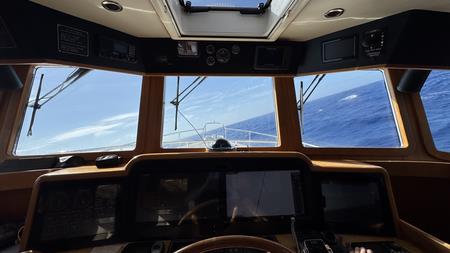
Day 6 in the wake — a full day and night working through the weather front, the wind swinging onto the beam and building after dark until we spent the small hours rolling. So we called it Movie Day and rode it out below.
We spent the whole day pushing through the front, the wind holding a steady 20 knots or so and slowly working its way forward — from behind the beam around to square on it. As night came on it kept building, peaking at 2:30 in the morning as we came through the last of it: gusts pushing 38 knots and sustained in the high 20s, all of it right on the beam. And so we rolled.
Early on we saw what the day had in store and declared it "Movie Day." More cookies came out of the galley, thanks to Shawna's fearless hot-pan wielding, and the rest of the day settled into movies and naps. When you weren't on watch you were down below, where the rolling is a good deal easier to take, and that's where most of us stayed.
We even took the weather onto the stern for a spell come dinnertime, coming around to a heading of 020 — a little back toward the Azores — through the making and eating of the meal. It cost us a bit of ground, but a settled boat and a peaceful dinner were well worth the trade, and we swung back on course once the plates were cleared.
All systems continue to be boring — which, out here, is the best thing they can be. We made good 139 nautical miles for the day. Not all of that was made straight toward Bermuda, mind you — we've been climbing up toward the lighter winds forecast over the next few days — but it's solid progress all the same, and it narrows the gap to St. George's.
Follow the dot: trackmywake.com/wake/next-chapter.
— Chris & the crew of Next Chapter
|
|
|
|
|
|
|
Chris Dutton
7/10/2026 7:40 AM
|
Log #13: Day 5, More of the Same
Thursday 10:45 to Friday 10:45, mid-Atlantic bound for St. George's
Day 5 in the wake — a calm daytime run that ended at nightfall when we ran headlong into the front, flipping the wind from a gentle northeasterly to a solid southerly blow.
The sea kept calming through the day, right up until nightfall when we reached (or it reached us -- either way it is here) the front we'd been tracking. In short order it took the wind from NE at 12 knots to S at 20 — the switch we'd been expecting, just arriving after dark the way these things always seem to. This is exactly why we planned the course change: turning up to keep the weather more on the stern, work our way back onto the great circle route, and, with any luck, slip into lighter winds that are trending North of us currently.
The calm daytime hours were a gift for a different reason. On rough days everything I'm actively developing has to get stowed away, so a settled sea gave me the chance to get some much-needed work done — in this case on a marine product slated to launch this fall. It was a good window to put the last couple of days' worth of code changes to the test, and testing them in the rougher seas on either side of the calm turned out to be its own kind of useful.
On the boat, it's the report I like to give: systems all doing great, fuel burn sitting exactly where we expect it, water tanks topped off. We made good 147 nautical miles for the day, with St. George's, Bermuda now 1,200 nm off the bow.
Follow the dot: trackmywake.com/wake/next-chapter.
— Chris & the crew of Next Chapter
|
|
|
|
|
|
|
Chris Dutton
7/9/2026 3:43 PM
|
Log #12: Day 4, More of the Same
Wednesday 10:45 to Thursday 10:45, mid-Atlantic bound for St. George's
Day 4 in the wake — the sea laid down as promised, Shawna's cookies saved the afternoon, and we've made the call to run north when the next system arrives.
The weather improved through the day right on schedule, and with it came a good deal more of "letting the boredom sink in." No fishing again — still a touch too rough to make it worth the trouble — so the crew settled back into the quiet rhythm of a passage day. Then Shawna went and changed the mood entirely by baking homemade cookies. Nothing turns a long day around out here quite like the smell of cookies coming out of the oven; the smiles were instant and unanimous.
The mechanicals continue to do everything we ask of them. As the sea eased our run picked back up to 142 nautical miles for the day, and St. George's is now down to just 1,290 nm off the bow.
The real work of the day, though, was strategy. We're now watching a larger system tracking east, and it looks set to reach us Friday. We ran through a lot of options and have decided that when it arrives we'll turn north and put the weather on the stern. That does two things for us: it makes for a far smoother ride through the blow, and it carries us up into a very large calm area and back toward the great circle route — the track we'd have been on had we run straight from Horta to St. George's in the first place. Time will tell whether it's the right call, but for now that's the plan.
Follow the dot: trackmywake.com/wake/next-chapter.
— Chris & the crew of Next Chapter
|
|
|
|
|
|
|
Chris Dutton
7/8/2026 7:28 AM
|
Log #11: Day 3, Let the Boredom Sink In
Tuesday 10:45 to Wednesday 11:45, mid-Atlantic bound for St. George's
Day 3 in the wake — the front we'd been watching finally came through, handed us a lumpy ride and a slow 119 nm, and then cleared off to leave us in easier air.
The wind built steadily through the day and into the evening, climbing until it topped out at a sustained 25 knots around 9 AM Wednesday. By 10 the front had passed us by, and the wind clocked around from ten degrees off the starboard bow to forty degrees abaft the beam — the tell that we were through the worst of it. Since then it's eased back to a gentle 12 knots, the boat riding easier with every hour.
As Shawna likes to say, "let the boredom sink in" — and that about covers the day. A strong head sea set up a hobby-horse pitch, not rough exactly, but a far cry from the glassy calm of the two days before it. So we did what you do out here: everyone found their corner and their project. There was reading, there was work, there were crafts, there was a great deal of snacking, and there was plenty of just standing at the rail staring at the horizon. Out here that counts as a full day.
No fishing today — the rough weather made it a poor prospect, and the Sargasso weed was out in abundance, fouling anything you'd care to trail behind the boat. The lines stayed in.
The boat, as ever, continued to perform beautifully — all systems nominal. The head sea did put a dent in our run, holding us to 119 nautical miles for an average of 4.96 knots, and it pushed the fuel burn up the way a sea on the nose always does. But thanks to those first two easy days, we're still sitting well above the curve we need to make St. George's with fuel to spare. A slow day, comfortably absorbed.
Follow the dot: trackmywake.com/wake/next-chapter.
— Chris & the crew of Next Chapter
|
|
|
|
|
|
|
Chris Dutton
7/7/2026 6:55 AM
|
Log #10: Day 2, A Fin in the Blue
Monday 10:45 to Tuesday 10:45, mid-Atlantic bound for St. George's
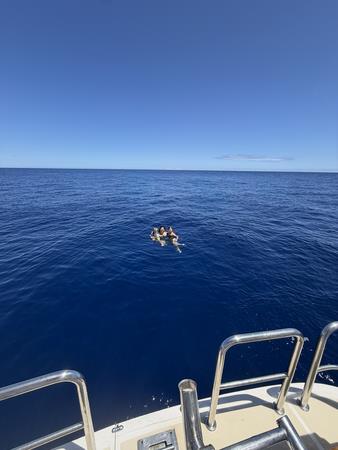
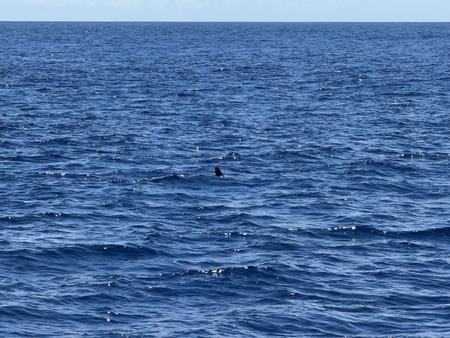
Day 2 in the books — another 146 nm astern, a swim in water two miles deep, and an unexpected visitor who put a quick end to it.
The weather is holding, and holding well. Through the day the wind sat steady at 7 knots out of the south, then swung around in the evening and overnight to put those same 7 knots on the bow. By daybreak it had built to 12 knots, ten degrees off the port bow — still nothing to complain about. The seas stayed just as kind: a one-foot ground swell with a little chop riding on top, the sort of surface that lets the boat get on with her work and lets the crew forget they're standing on an ocean.
Fishing, meanwhile, remains a study in humility. The lines went out and came back untouched — the skunk is riding with us still. We did spot a dorado jump not far off the beam, close enough to remind us there are fish out here and pointed enough to remind us they want nothing to do with our hooks. Good thing the galley and commissary were packed to the rafters before we ever left the dock, because at this rate the sea is not going to feed us.
The real event of the day came when we pulled back to Neutral for a swim. Mid-ocean swims are one of the great morale boosters on a long crossing — there's just nothing like it. And a word on the tracker, for anyone watching from home: that alarmingly warm sea temperature you're seeing is wrong. We reckon the sensor is off by something like 18 degrees. Our own estimate put the water a little over 80°F, which was exactly the right amount of refreshing. The swim came to a swift and orderly end when Lexi spotted a shark fin cruising the surface about a hundred feet off — not aggressive, just curious, clearly out to see what all the splashing was about. Everyone was back aboard in good time, spirits high and headcount full.
On the numbers, the boat performed beautifully once again. We averaged 6.1 knots, sipped 2.4 gallons an hour, and laid down 146 nautical miles for the day. St. George's now sits a little under 1,600 nm off the bow — a big number still, but a smaller one than yesterday, and that's the whole game out here.
Follow the dot: trackmywake.com/wake/next-chapter.
— Chris & the crew of Next Chapter
|
|
|
|
|
|
|
Jack Burgess
7/6/2026 8:46 AM
|
Sounds like a dream come true crossing so far. Hope the fair winds and following seas continue to bless!
Jack, Shangri-La 6047
|
|
|
|
|
|
|
Chris Dutton
7/6/2026 6:58 AM
|
Log #9: Day 1, Horta to St. George's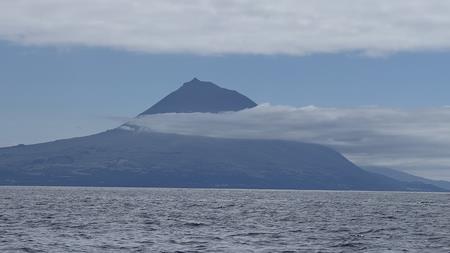 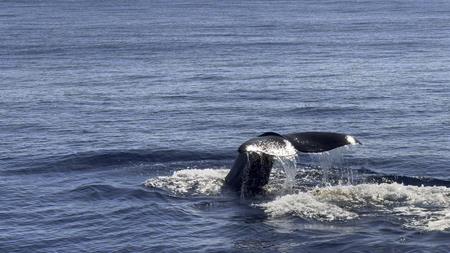
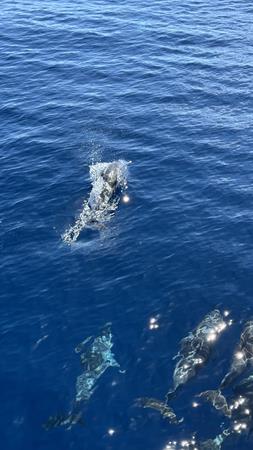
The North Atlantic, bound for Bermuda
First 24 hours of the long leg are in the books — Horta astern, St. George's some 1,850 nm ahead, and a motorboat's dream to start us off.
We cast off Horta at 10:45 Sunday morning, local time, and by 10:45 Monday we'd closed out a first day about as gentle as this ocean gets. If there's a set of conditions built for a trawler, this was it. We pulled away with all of 2.5 knots of wind out of the northeast, which over the course of the day climbed to a staggering 7 knots at its peak. Under us was a gentle ground swell with nothing but a ripple-to-gloss finish on the surface — the kind of sea state you can't stop grinning over.
The boat settled straight back into the rhythm we know: 1,000 rpm, sipping 2.4 gallons an hour, holding an average of 6.6 knots and laying down 151 nautical miles for the day. All systems nominal — still my favorite phrase while underway. The engine room checks resumed on their usual schedule, and I'm happy to report nothing of note: eyes, ears, and temp gun on everything that should be a certain temperature and not warmer, and every reading right where it belongs.
We also took the calm as a chance to top off the tanks with the watermaker — 7.25 hours of it — replenishing what we drew down in port. Nobody on this crew wants to drink port water if the Atlantic will hand us better, and out here it will. Fishing, on the other hand, remains a humbling exercise. We put lines out and, true to form, kept the skunk firmly aboard — not so much as a nibble. But I'll take a flat sea and a full night's sleep over a fish any day of the week, and today the ocean gave us the trade I'd choose every time.
The wildlife more than made up for the empty hooks. Day one served up a genuine parade: a pilot whale, a few sea turtles paddling along at the surface, and two enormous pods of dolphins that came to run with the boat. There's nothing quite like a 30+ dolphins deciding your bow wave is the best game in the ocean — it's the kind of thing that makes a long crossing feel less like distance and more like company.
The forecast ahead looks genuinely good. There's a little wind on the nose likely Tuesday into Wednesday, but the models have held remarkably steady for three days running now, all pointing to around 15 knots from the west-southwest. Stable predictions are their own kind of gift out here — they let you plan instead of just react.
One down, roughly a thirteen to go.
Follow the dot: trackmywake.com/wake/next-chapter.
— Chris & the crew of Next Chapter
|
|
|
|
|
|
|
Chris Dutton
7/5/2026 10:25 AM
|
Log #8: São Miguel Ashore, a Short Jump to Horta, and Reading the Weather West
Ponta Delgada and Horta, the Azores
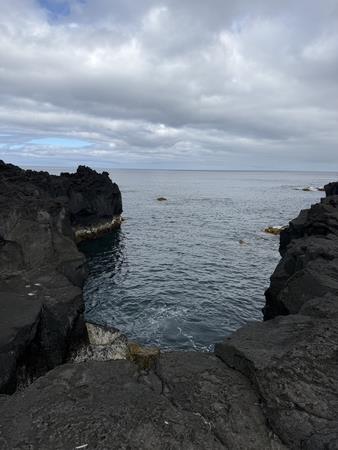 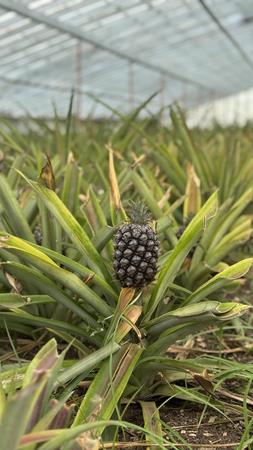  
A quick note on format: for this next leg — the long crossing to Bermuda — I'll be posting all the updates in this single thread rather than starting a fresh post each time. Follow along here and you'll have the whole passage in one place.
Six days at sea earns you a few days on land, and São Miguel delivered — hot springs, waterfalls, a 140-year-old tea factory, pineapples grown under glass, and a caldera that changes its mind in thirty minutes. Then a quick overnight hop put us in Horta, where we watched the weather, weighed the trade, and this morning slipped the lines for the long jump to Bermuda.
We were met in Ponta Delgada by some of the warmest, most genuinely welcoming people of the whole trip — the kind of reception that makes a tired crew feel human again. We took one full down day to do the unglamorous work: scrub the boat, put everything back where it belongs, shoot some photos for interested buyers, and generally recover from six days of the ocean moving the floor around. There's a particular kind of tired that only a passage produces, and the cure is a day of not going anywhere.
Then we rented a car for two days and packed the sights in tight.
Hot springs. We hit two, and my clear favorite was Ponta da Ferraria — a geothermal spring that flows straight into the sea. You sit in a natural pool where scalding volcanic water mixes with the cold Atlantic, and the temperature rises and falls with the surge as each swell pushes in and draws back. Hot seawater with a gentle ocean rhythm doing the mixing for you; I've been in a lot of hot springs and never one quite like that.
Waterfalls. The island is green in a way that only a lot of rain explains, and that rain has to go somewhere. We chased a few of the falls that come with the territory.
Gorreana Tea Factory. This one got the engineer in me going. Gorreana has been making tea on this hillside since 1883 — the oldest tea plantation in Europe, and one of the last still running. We walked the fields and then the line, watching a process that has barely changed in 140 years, right down to hand-sorting the leaves as a final quality-control step. Machinery where machinery earns its keep, human eyes where they still beat the machine.
A pineapple plantation. I did not expect pineapples in the middle of the North Atlantic, but São Miguel has been growing them under glass since the mid-1800s — when the island's orange trade collapsed and growers needed a new crop. These aren't field pineapples. They're raised in whitewashed glasshouses that recreate a tropical climate the Azores don't naturally have, and the plants take roughly two years to bear a single fruit. There's even a deliberate "smoking" step, where the greenhouses are filled with smoke to trigger every plant to flower at once for a uniform harvest. The result is a smaller, denser, more complex fruit — enough of a specialty that it carries a European Protected Designation of Origin. Two years and a smokehouse for one pineapple; you taste it differently after that.
Furnas. Lunch here is a piece of engineering in its own right. In the geothermal field, restaurants bury their cozido das Furnas — a layered meat-and-vegetable stew — in the volcanically heated ground and let the earth cook it for hours. We watched a few pots get hauled up out of the steaming holes, then sat down to eat the batch that had come out of the ground that morning. Slow food in the most literal sense: the planet is the oven, and it runs on its own schedule.
Sete Cidades. The showstopper, and a lesson in Azorean weather all by itself. We arrived to brilliant sun over the twin crater lakes, and within about thirty minutes watched cloud pour over the caldera rim and down the inside walls at a genuinely startling pace — a waterfall made of fog. Then we drove out to the west and, minutes later, were back in full sun. If you want to understand why we obsess over weather windows out here, spend half an hour at Sete Cidades.
The short hop to Horta. Thursday we slipped the dock at noon and ran 21 hours direct to Horta — an easy overnight after what came before. Once again the marina gods smiled on us: the harbormaster told us they'd been completely full until two days prior. Our timing was pure luck, and it's holding for a reason — the ARC boats are starting to leave the islands for the mainland in sizable flotillas, and space is opening up behind them just as we arrive.
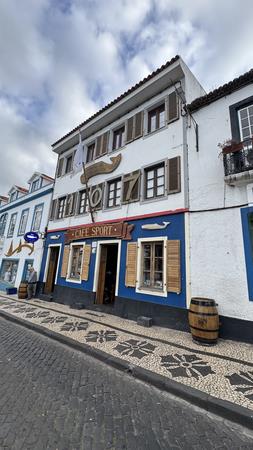
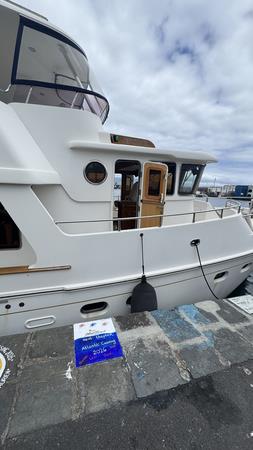
Two things you don't skip in Horta. There's a pair of rituals every crew that stops here is honor-bound to observe, and we did both. The first is Peter Café Sport — the legendary sailors' bar that has been the crossroads of the mid-Atlantic since 1918, where generations of crews have checked in, swapped weather notes, and steadied their nerves before the jump. We paid our respects and, per tradition, drank the gin. The second is the mural. Horta's long breakwater is covered end to end in thousands of paintings, each one left by a passing boat — superstition holds that if you don't paint your mark before you leave, the sea will take offense. We were not about to test that theory on the eve of a two-week crossing, so we found a bare patch of concrete and left Next Chapter's mark alongside the rest.
The one open item. We'd hoped to take delivery of a part here — a failed Maretron pressure sensor from one of our fuel tanks — but it was stuck somewhere in the shipping pipeline on the mainland. We ordered it within hours of catching the failure on the leg from the Algarve to São Miguel, and were assured it would be waiting for us. It was not. Worth being precise about what this actually means, because it drove the next decision: the sensor is a nice-to-have, not a critical component. We still have manual sight gauges on both tanks and a working digital gauge on the starboard tank. Losing the port sensor makes fuel monitoring less convenient, not less safe — and on a crossing, that distinction is the whole game.
Now the big one. Our sights were set on the long passage to St. George's, Bermuda — 14 to 16 days of open water. We watched the weather closely, and specifically how far north the Azores High decided to push, because that high is both our obstacle and our friend: a sailor curses its dead air, but a trawler wants exactly that flat water, and riding its northern edge is how we make the miles with margin while also staying south of the lows. The forecast opened a departure window starting on Saturday that may hold through Monday, and Sunday landed right in the sweet spot. Giving us enough time to rest and partake in Horta traditions. That set up the trade we weighed at the dock: a great weather window now, versus waiting on a tank sensor we'd already established we don't strictly need. Weather doesn't negotiate and parts do, and when a proven boat, a sound forecast, and a redundant system all line up, you don't hold a good window hostage to a convenience. So we made the call — we cast off Horta at 10:45 this morning, local time, without waiting on the part, and pointed the bow west. More to come now that we're underway.
Watch the dot: trackmywake.com/wake/next-chapter.
— Chris & the crew of Next Chapter
|
|
|
|